Race PlansUltra

Ultra-Trail Kosciuszko Race Plan 2026

A practical guide to the alpine course, checkpoint supplies, carrying enough between refills and building a nutrition plan for your chosen Kosci distance.

Date
26–28 November 2026
Location
Snowy Mountains / Thredbo, NSW
Distance
Kosci30 · Kosci50 · Kosci100 · KosciMiler
Elevation
50: 1,355 m+ · 100: 2,973 m+ · Miler: 4,731 m+
Course
Alpine plateau trails, forest and valley trails
Ultra-Trail Kosciuszko 2026

The course

Ultra-Trail Kosciuszko takes place in the Snowy Mountains on 26–28 November 2026, with the official site listing 33 km / 596 m+, 50.3 km / 1,355 m+, 105.6 km / 2,973 m+ and 160.5 km / 4,731 m+ (official event overview).

Don't confuse the race names with exact measured distances. Kosci30 is listed as 33 km and Kosci100 as 105.6 km for this edition; use your race's final course file when estimating time and supplies (official overview).

The Kosci50 starts at Perisher, descends towards Bullocks Flat, follows the Thredbo Valley, climbs to Eagles Nest and finishes at Friday Flat. Its official page lists a 7:00 am start on 26 November and a 13-hour-30-minute maximum race time, but contains inconsistent clock-time estimates elsewhere, so confirm final departure and finish cut-offs in the runner guide (Kosci50 course).

What the course means for your plan

The organiser describes varied, runnable alpine trails through snow gums, granite outcrops and mountain streams. Runnable does not mean flat or quick under fatigue (event overview). Our practical recommendation is to estimate each leg from its terrain and your likely effort rather than apply road pace.

Rehearse accessing food with cold hands and a loaded vest. Put essential fuel within reach, protect spare clothing from wet bottles and identify flatter sections where eating will be easier. Do not assume that advice about the Kosci50 route applies to the 100 or Miler: each distance needs its own map and checkpoint plan.

What's on course

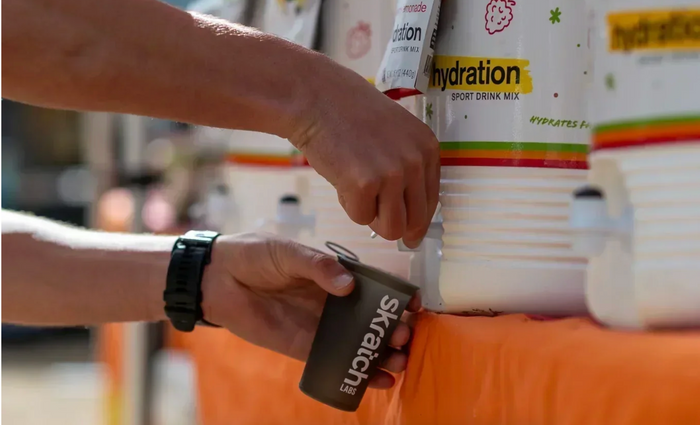
The organiser's on-course page lists water, Näak nutrition products, gels, soft drink, fruit, bakery items, lollies and some hot food and drink. It explicitly says supplies cannot be guaranteed at every checkpoint and directs runners to the race guide for exact stocks (on-course information).

That page also retains a 2025 pacer-registration deadline. Treat it as general planning information, not confirmation that every timing or support rule is final for 2026 (on-course information).

Carry and refill deliberately

The event is cupless, so bring the drinking equipment required for your distance (on-course information). Our recommendation is to carry your familiar core fuel and regard checkpoint food as a supplement, not the only source.

Use the final race-specific table to record checkpoint name, expected travel time, available refills, whether crew can attend and whether a drop bag is permitted. Crew and drop-bag access vary by distance and checkpoint; the organiser directs runners to the individual race pages and runner guide (on-course information).

At a refill, check whether you're adding plain water or mixed drink. Don't accidentally double the powder concentration in a partly full flask. Reserve food for an unexpectedly slower leg and keep your waste contained.

Fuelling strategy

Carbohydrate
Individualised · practise first
Fluid
450–750 mL/h starting reference
Sodium
Individual needs, all sources
Caffeine
Optional · track total intake

Kosci-specific rehearsal

Plan one nutrition rehearsal around a hilly route and the same carrying equipment, rather than only a flat long run. Practise small, regular portions when you slow to a walk and check whether gloves or a jacket make packets difficult to reach. Include the expected stop time when calculating fuel for the next leg.

Set an intake you can sustain

The Australian Institute of Sport gives 30–60 g carbohydrate/hour for endurance exercise lasting 1–2.5 hours and up to 90 g/hour for events longer than 2.5–3 hours. These are duration-based guidelines, not a requirement for every trail runner.

The 2019 ultra-specific ISSN position stand takes a more conservative approach to very long races, recommending 30–50 g/hour within a broader energy plan and emphasising individual tolerance. Treat the two sources as context, not competing prescriptions: race intensity, time on feet and your rehearsed gut tolerance matter. Higher targets need progressive practice; don't jump to 90 g/hour on race day.

Count everything, not just gels

Add the carbohydrate in gels, drink mix, chews and food. As an illustrative calculation, a practised 60 g/hour plan for a two-hour leg needs 120 g carbohydrate. If a gel's label says 30 g, four gels supply that amount before counting anything in your bottles or food. This is arithmetic, not a product prescription or a universal target.

Split supplies into checkpoint-to-checkpoint portions. Add a modest contingency for slower travel, but separate emergency food from the food you expect to eat. Do not count an uncertain aid-station menu as guaranteed fuel.

Match fluid to conditions

The ISSN position stand suggests 450–750 mL/hour during ultra racing, adjusted for the environment, work rate, body size and tolerance. It is a starting reference, not a volume to force down. Rehearse in similar conditions and combine thirst, your experience and the available refill points when planning.

Carry capacity for the longest expected time between refills, not merely the longest distance. Avoid over-drinking: sodium does not make excessive fluid intake safe, and it does not eliminate exercise-associated hyponatraemia risk (ISSN).

Sodium, caffeine and variety

Individualise sodium using the conditions, your sweat losses and the sodium already supplied by drinks and foods. The ISSN review discusses 500–700 mg sodium per litre of fluid, but that is a drink concentration, not an automatic hourly dose.

Caffeine is optional. The ISSN review advises rehearsing your strategy, counting all doses and avoiding repeated large doses over a long ultra. A caffeinated gel plus coffee plus cola all contribute to the same total; caffeine is not a replacement for safe rest or withdrawal when needed.

Use familiar sweet and savoury options to build a plan you can repeat. Our guides to testing nutrition before a race and avoiding flavour fatigue are useful preparation.

Your plan by distance

Choose your distance. These are preparation frameworks, not predicted finish times or fixed product prescriptions. Use your rehearsed intake and the final race guide to make the plan your own.

Kosci3033 km · shorter alpine day

For runners wanting the shorter Kosci course without treating it as a road-distance effort.

The official overview lists 33 km and 596 m+ (event overview). Build a simple hourly routine from your practised duration, carry familiar fuel from the start and identify your confirmed refill points. Don't assume the name means an exact 30 km course.

Kosci5050.3 km · first alpine ultra

For runners moving up to an ultra or wanting a substantial alpine day.

The course is listed as 50.3 km with 1,355 m+, starting at Perisher and finishing at Friday Flat (Kosci50). Rehearse fuelling during runnable terrain and hiking. Divide supplies by your expected leg times; don't rely on a finish-line bag for food needed during the race.

Kosci100105.6 km · long-day planning

For experienced runners who need a refill, bag and changing-conditions plan.

The overview lists 105.6 km and 2,973 m+ (event overview). Prepare a leg-by-leg plan with separate nutrition and equipment tasks. Check whether your likely finish extends into darkness, practise familiar savoury options and confirm support access for this distance rather than copy the Miler rules.

KosciMiler160.5 km · full ultra system

For experienced ultra runners planning nutrition, darkness, crew and contingency as one system.

The overview lists 160.5 km and 4,731 m+ (event overview). Break the event into manageable race legs and prepare an alternative familiar food for each major resupply. Count total caffeine across the whole race and confirm the current pacer, gear and drop-bag rules before finalising logistics.

Race week and race morning

  • Two to three weeks out: complete your final substantial nutrition rehearsal during an appropriate scheduled training session. Use the same vest, bottles, foods and packing system; don't add a long run simply to test nutrition.
  • Race week: read the current runner guide, final course notices, checkpoint departure cut-offs, weather forecast and mandatory equipment list. Confirm transport, gear check and bag-drop deadlines.
  • Before travelling: divide fuel into labelled race legs. Prepare a clear crew sheet with what to hand over, what to refill and what to take away. Pack a spare familiar fuel option.
  • The day before: favour familiar carbohydrate-containing meals, normal hydration and foods you tolerate. Don't attempt to bank hydration by drinking excessive water.
  • Race morning: eat the breakfast and timing you've practised. Check bottles, phone, lights and access to your first leg's fuel. Allow enough time for check-in or transport rather than rushing.
  • At each checkpoint: assess yourself, refill, collect the next leg's supplies and confirm your route. Avoid letting an unplanned long stop consume your cut-off margin.
  • If you feel unwell: tell race medical staff. Confusion, collapse or persistent vomiting are not problems to push through by taking more gels or salt.
  • After finishing: change into dry clothing, eat and drink according to tolerance and arrange safe transport. Don't drive if exhausted or sleep-deprived.

Frequently asked questions

Does every Kosci distance summit Mount Kosciuszko?

Don't assume so. The festival overview describes Australia's highest peak, but the Kosci50 route specifically names Perisher, Bullocks Flat, Thredbo Valley, Eagles Nest and Friday Flat. Check the route for your chosen distance rather than apply a festival-level description to every race.

Can I rely entirely on the checkpoint food?

The organiser says it cannot guarantee all goods at all aid stations (on-course information). Our recommendation is to carry your familiar core fuel between confirmed resupply points and use drop bags or crew only where the current rules permit.

How should I calculate what to carry for an alpine leg?

Use expected hours, not just kilometres. As an example, a practised 60 g/hour plan for a 2.5-hour leg needs 150 g carbohydrate before a contingency. Count carbohydrate in drink mix and food as well as gels, and carry at least the equipment and supplies required by the current race rules.

Is the on-course information final for 2026?

Not every detail can be treated that way: the on-course page still includes a 2025 pacer deadline. Recheck the 2026 runner guide, race notices and your distance's course table before using exact timings or support permissions.

Event reference: official information.

Event reference: official information.

Event reference: official information.

Nutrition context: AIS carbohydrate guidance and the 2019 ISSN ultra-marathon position stand. This is general educational guidance, not personalised medical or dietetic advice. Confirm current race rules and consult an accredited sports dietitian for individual requirements.

Last reviewed 2 October 2026

Keep reading

More race plans