















Nutrition Plan for Your First Ultra Marathon
Table of Contents
- How Many Carbs Per Hour You Actually Need
- Ultra Marathon Hydration Strategy: Fluid, Sodium and Sweat Rate
- Gut Training for Runners: Teaching Your Stomach to Fuel
- Best Energy Gels for Marathon Performance and Ultra Distances
- Race Day Fuelling: Aid Stations, Drop Bags and Night Sections
- Common Fuelling Mistakes First-Timers Make
- Frequently Asked Questions
Last Updated: October 2, 2026
How Many Carbs Per Hour You Actually Need
Your first ultra marathon nutrition plan starts with one number: carbohydrate intake per hour, and that number is the foundation of any ultra marathon nutrition strategy. Most sports dietitians suggest aiming for 60 grams of carbs per hour for efforts lasting two to three hours, rising toward 90 grams per hour for races beyond four hours. Going above that ceiling without gut training is where things unravel.
Your Starting Carb Number by Race Duration
| Race Duration | Carbs Per Hour | Fuel Format |
|---|---|---|
| 2-3 hours | 60g | Gels and chews |
| 4-6 hours | 60-75g | Gels plus drink mix |
| 6-10 hours | 75-90g | Mixed sources, real food |
| 10+ hours | 60-90g | Rotate formats, add savoury |
Start at the lower end of your bracket. Add roughly 10g per hour every few long runs until you find the ceiling your stomach accepts.
Ultra Marathon Hydration Strategy: Fluid, Sodium and Sweat Rate
An ultra marathon hydration strategy is not just about drinking more. It is about matching fluid and sodium to what you actually lose, because overdrinking plain water can dilute your blood sodium and cause hyponatremia, a serious medical emergency.

Working Out Your Sweat Rate and Sodium Loss
Weigh yourself nude before and after a one-hour run at race pace, note how much you drank, and calculate the difference. Every kilogram lost equals roughly one litre of fluid. A salty crust on your skin or stinging eyes after a session suggests higher sodium losses, which may mean you need a stronger electrolyte mix.
Gut Training for Runners: Teaching Your Stomach to Fuel
Gut training for runners is the practice of repeatedly consuming carbohydrate during training so your stomach and intestines adapt to absorbing it at race intensity. It is not optional for anyone targeting 60g per hour or more.
Build tolerance over eight to twelve weeks:
- Start with one gel mid-run, taken with water
- Increase to one gel every 45 minutes
- Add a carb drink mix alongside gels
- Practise at race pace, not easy pace
- Test caffeine gels on a long run, never first on race day
Best Energy Gels for Marathon Performance and Ultra Distances
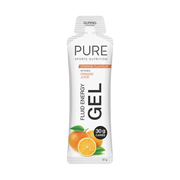
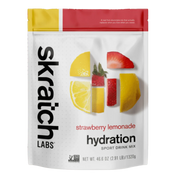
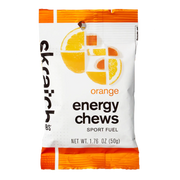
The best energy gels for marathon performance and ultra distances are the ones your gut already tolerates at race pace, not the ones with the highest carbohydrate number on the packet. For a first ultra, the format matters as much as the brand, because the same 60-90g per hour can be delivered as a gel, a chewy, a drink mix or real food, and each has a different effect on your stomach, your hands and your willingness to keep eating.

Gels vs. Chews vs. Drink Mix vs. Real Food
| Format | Typical Carbs | Pros | Trade-offs |
|---|---|---|---|
| Gel | 20-30g per sachet | Fast, precise, easy to schedule | Sticky mouthfeel, flavour fatigue, wrapper litter |
| Chews | 30g per pack | Easy to portion, slower to eat | Chewing is hard when breathing is heavy |
| Drink mix | 60-90g per 500-750ml | Combines fuel and fluid | Hard to separate carb and fluid needs; heavy to carry |
| Real food | Variable | Palatable late, cheap, savoury option | Slower gastric emptying, harder to dose precisely |
Most first-timers do best on a hybrid: gels or chews early when appetite is reliable, drink mix through the middle, and a savoury real-food option in the back half when sweet flavours stop appealing. This is the point where flavour fatigue, not fitness, ends a lot of first ultras.
What to Look For on the Label
- A simple sugar profile (glucose and fructose together) rather than a single sugar, because they use different intestinal transporters and can raise absorption above roughly 60g per hour.
- A mild or neutral flavour, so you can still face it at hour eight.
- A texture that does not demand immediate washing down with water.
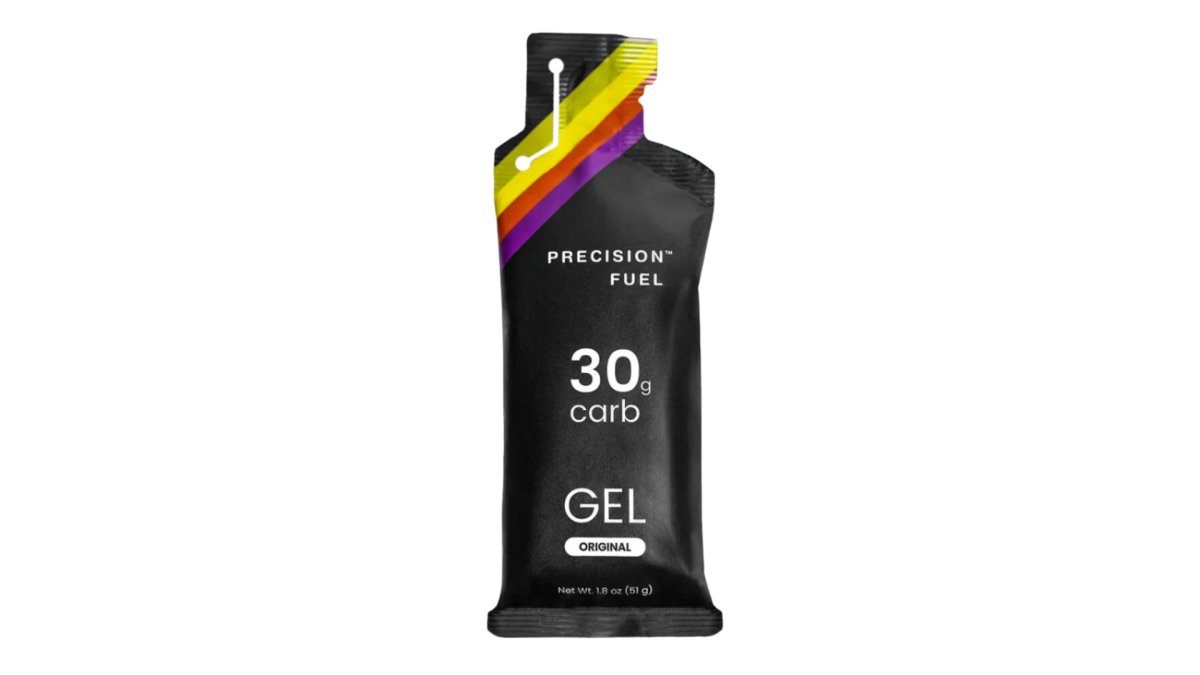
- A carbohydrate number you can actually divide into your hourly target, 30g gels make a 60-90g per hour plan easy to schedule.
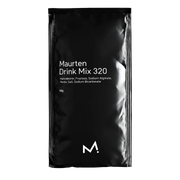
Examples that fit this profile include Precision Fuel & Hydration PF 30 Energy Gel (30g carbohydrate per gel, neutral Original flavour designed to reduce stickiness) and PF 30 Energy Chews (30g per pack) for runners who prefer chewing. Maurten Drink Mix 320 takes a different route, delivering 80g of carbohydrate per 500ml using Hydrogel Technology that forms a gel in the stomach, which some athletes find reduces the sloshing sensation at high intensity.
The Beginner Trap
The most common error is choosing a gel because a faster runner uses it. Your gut has its own tolerance ceiling, and it is built in training, not bought. Pick one gel, one chew and one drink mix, use them for eight to twelve weeks, and only then decide whether to change anything.
Race Day Fuelling: Aid Stations, Drop Bags and Night Sections
Race day fuelling is where the plan meets reality. Aid stations rarely stock exactly what you trained on, so carry your own carbohydrate and use stations mainly for water and ice. Know what is on offer before you travel.
Precision Race Day Fuel Pack – Gels →
Common Fuelling Mistakes First-Timers Make
Most fuelling mistakes are not knowledge gaps, they are testing gaps. The runner who bonks at kilometre 60 usually knew the theory; they just never rehearsed it. The fix is a personalised testing protocol you run in training, not a longer list of rules.
The Mistakes That Actually End Races
- Trying something new on race day. Everything in your plan should have been used at least twice in training, including the exact brand, flavour and format.
- Drinking only water and skipping sodium, which risks hyponatremia.
- Starting to eat too late, after glycogen depletion has already set in.
- Carrying too much and running out of hands, or too little and bonking.
- Ignoring solid food entirely on very long efforts, then finding gels unbearable at hour eight.
- Treating caffeine as a free hit rather than a timed tool; save it for the final third.
- Fuelling to hunger instead of to the clock, which fails once appetite shuts down.
Bonking, the sudden collapse of energy when glycogen runs low, is almost always a fuelling failure rather than a fitness one, and it is preventable with a plan and a schedule.
Your DIY Sweat Test
Weigh yourself nude before and after a one-hour run at race pace, note exactly how much you drank, and calculate the difference. Every kilogram lost equals roughly one litre of fluid. A salty crust on your skin or stinging eyes after a session suggests higher sodium losses, which may mean you need a stronger electrolyte mix. Repeat the test in cool and warm conditions, because your sweat rate is not a fixed number.
Your DIY Gut Test
Build tolerance over eight to twelve weeks using a simple log:
- Start with one gel mid-run, taken with water
- Increase to one gel every 45 minutes
- Add a carb drink mix alongside gels
- Practise at race pace, not easy pace
- Test caffeine gels on a long run, never first on race day
- Record what you took, when, and how you felt
Budget-Friendly Fuelling
You do not need a shelf of commercial products to finish a first ultra. Electrolyte tablets are cheaper per litre than premixed drinks. Bundles cut the per-gel cost. Real-food options such as boiled potatoes with salt, banana, plain sandwiches and dates can cover a meaningful share of your hourly carbohydrate at a fraction of the price, provided you test them in training, because their slower gastric emptying is exactly why they suit the later, slower hours of a long race.
Frequently Asked Questions
How many grams of carbohydrates per hour do I need for my first ultra marathon?
Most runners can absorb 60 to 90 grams of carbohydrate per hour, and trained guts can push toward 90 to 120 grams using a mix of glucose and fructose. Start at 60 grams per hour in training and build up gradually. For a five-hour ultra, that is roughly 300 grams of carbs across the race. Gels, chews and drink mixes all count toward the total, so add up every source rather than guessing.
Should I eat solid food or gels during an ultra marathon?
Both work, and most runners use a mix. Gels and chews are easy to carry and absorb quickly, which suits the first half when intensity is higher. Solid food at aid stations, such as fruit, sandwiches or boiled potatoes, gives your palate a break and helps with the psychological side of eating for hours. The deciding factor is what your stomach tolerates in training, not what works for someone else.
How do I avoid gastrointestinal distress during an ultra marathon?
Gastrointestinal distress usually comes from too much, too fast, or too many different products. Practise your exact race-day nutrition on long training runs, keep your carb intake steady rather than front-loading, and drink to thirst instead of forcing fluid. A hydrogel drink mix such as Maurten Drink Mix 320 delivers 80 grams of carbs per 500ml and is designed to reduce the sloshing sensation in the stomach at higher intensities, which helps some runners keep fuel down.
How do I test my nutrition plan during training runs?
Treat long runs as rehearsals. Pick two or three products, use them at your planned race-day rate, and note how you feel in the final hour. Test one new thing at a time so you know what caused any problem. Run at least three long sessions with your full fuelling plan before race day, including the caffeine timing you intend to use. If a gel sits well at hour four of a training run, it will likely sit well on race day.
Your first ultra will expose every gap in your fuelling plan, and the runners who finish strong are the ones who rehearsed it. CREWED stocks gels, chews, electrolyte products and and race-day packs, with fast shipping from Sydney and free delivery on orders over $89, so you can test your full race nutrition well before the start line. Build your plan, train your gut, and get started with CREWED to fuel every kilometre with confidence.